Gem identification combines physical measurements and optical observations. Different methods provide different clues; their results are interpreted together.
The methods below appear on GTLRSC’s report letterhead. The examination selected for an individual specimen depends on its characteristics and the question being investigated.
Illustrative laboratory equipment
OPTICAL MEASUREMENT
Refractive index (R.I.)
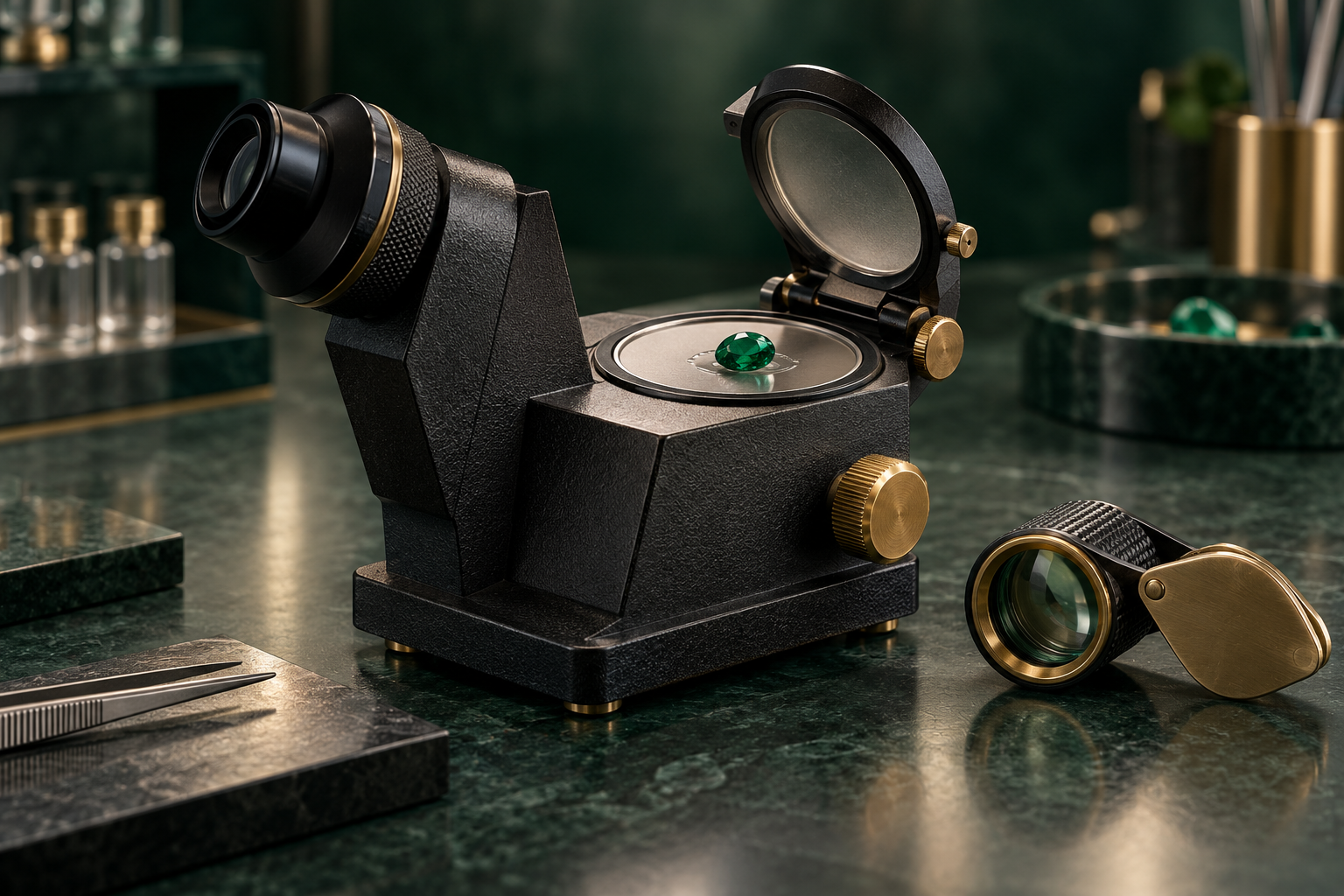
A refractometer provides readings related to how light travels through a gemstone. These readings are compared with reference values for known gem materials.
What it contributes
Refractive-index readings help narrow the possible identity of a stone. Where observable, differences between readings can provide further information about its optical behaviour.
How the result is used
Readings are interpreted alongside other properties. Some materials have overlapping values, and a stone’s surface or the instrument’s measurement range may limit what can be recorded.
Illustrative laboratory equipment
PHYSICAL MEASUREMENT
Specific gravity (S.G.)
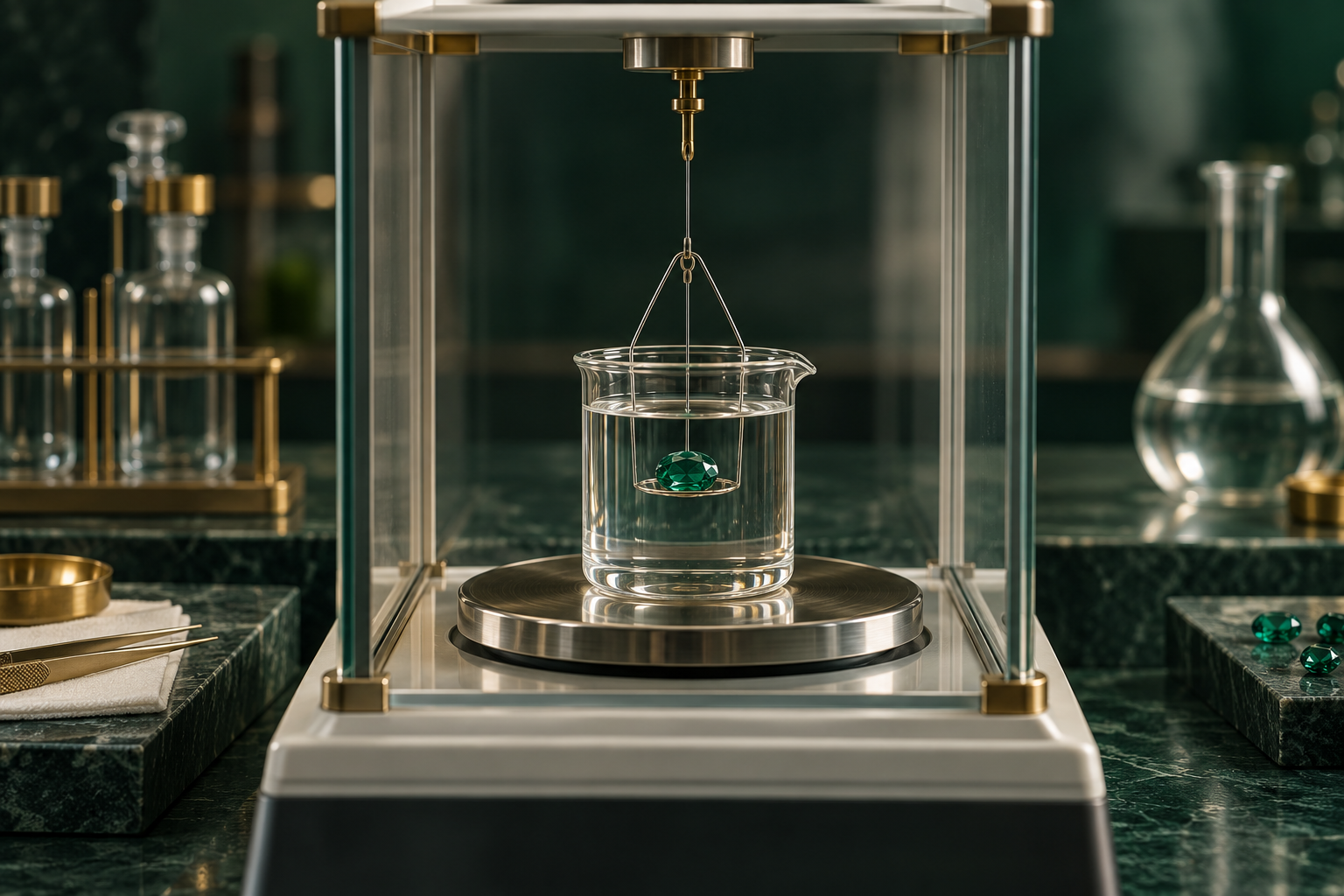
Specific gravity expresses a material’s density relative to water. For suitable loose stones, hydrostatic weighing compares measurements taken in air and in water.
What it contributes
Gem materials can look alike but differ in density. Specific gravity provides another property to compare with reference information when assessing identity.
How the result is used
The measurement is considered with optical tests and observations. Specimen size, mounting and measurement conditions can affect whether a useful result is obtainable.
Illustrative laboratory equipment
MAGNIFIED OBSERVATION
Microscopic examination
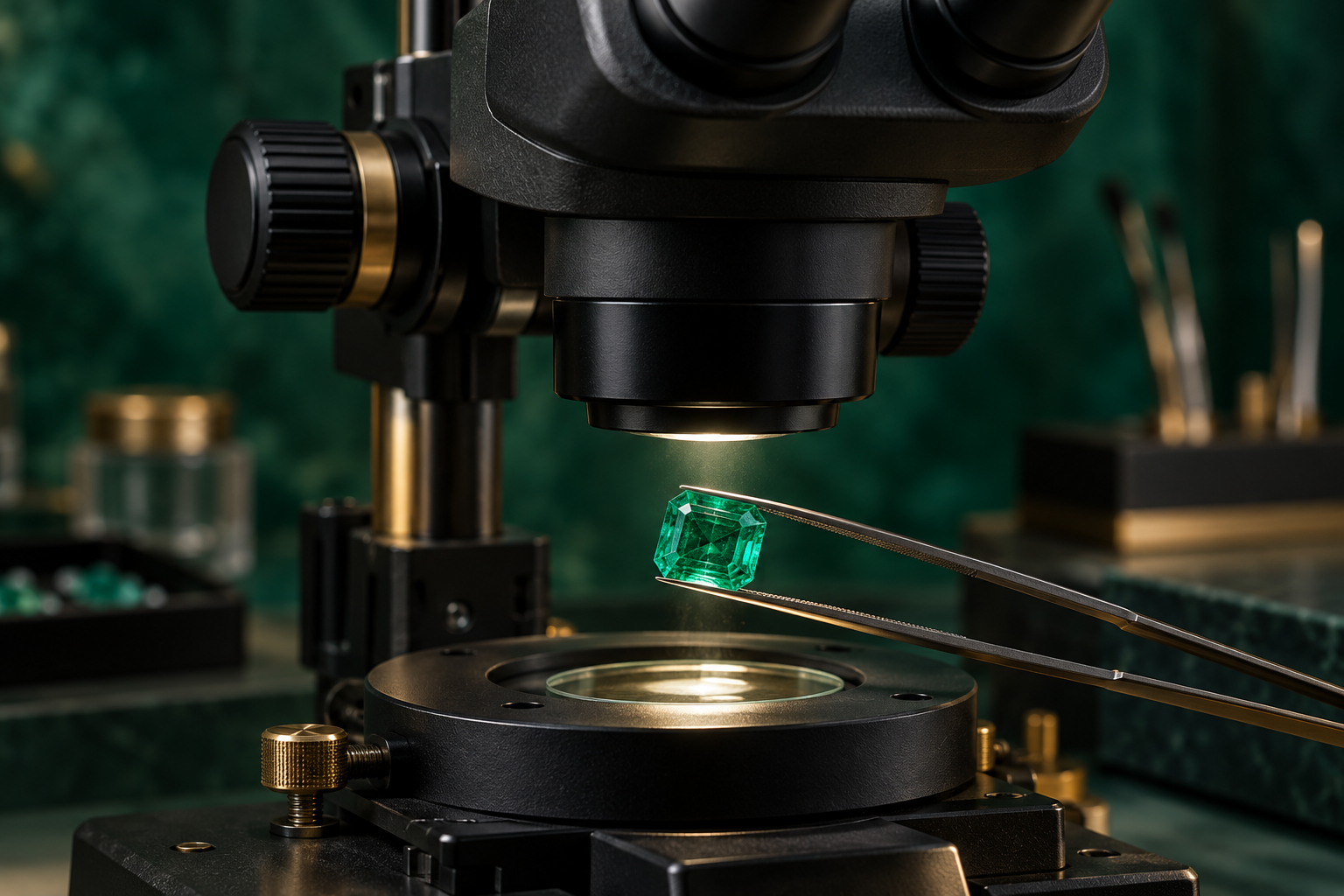
A gemological microscope allows closer examination of a stone’s surface and interior. Different lighting conditions help reveal inclusions, growth features, fractures and other characteristics.
What it contributes
Some features provide clues to gemstone identity, natural or synthetic formation, or possible treatments. Their interpretation depends on the type of material and the combination of observations.
How the result is used
An inclusion or surface feature is assessed in context. Microscopy can guide further testing, and its observations are considered with other examination results.
RESPONSE TO LIGHT
Ultraviolet fluorescence
Some gemstones emit visible light when exposed to ultraviolet radiation. The examiner observes features such as the colour, strength and distribution of that response.
Fluorescence behaviour can offer clues to identity and, in some cases, treatment. A weak or absent response is also an observation; no single fluorescence response establishes identity by itself.
LIGHT ABSORPTION
Absorption spectrum
A spectroscope separates light into its component colours, allowing an examiner to look for absorption lines or bands associated with a gemstone.
These patterns can provide information relevant to identity and colour. Their usefulness depends on the material, its colour and the quality of the observable spectrum.
Several clues. One recorded identification.
Laboratory findings are interpreted together and recorded in the specimen’s report. This page explains common methods; it is not a test result for a particular gemstone.